
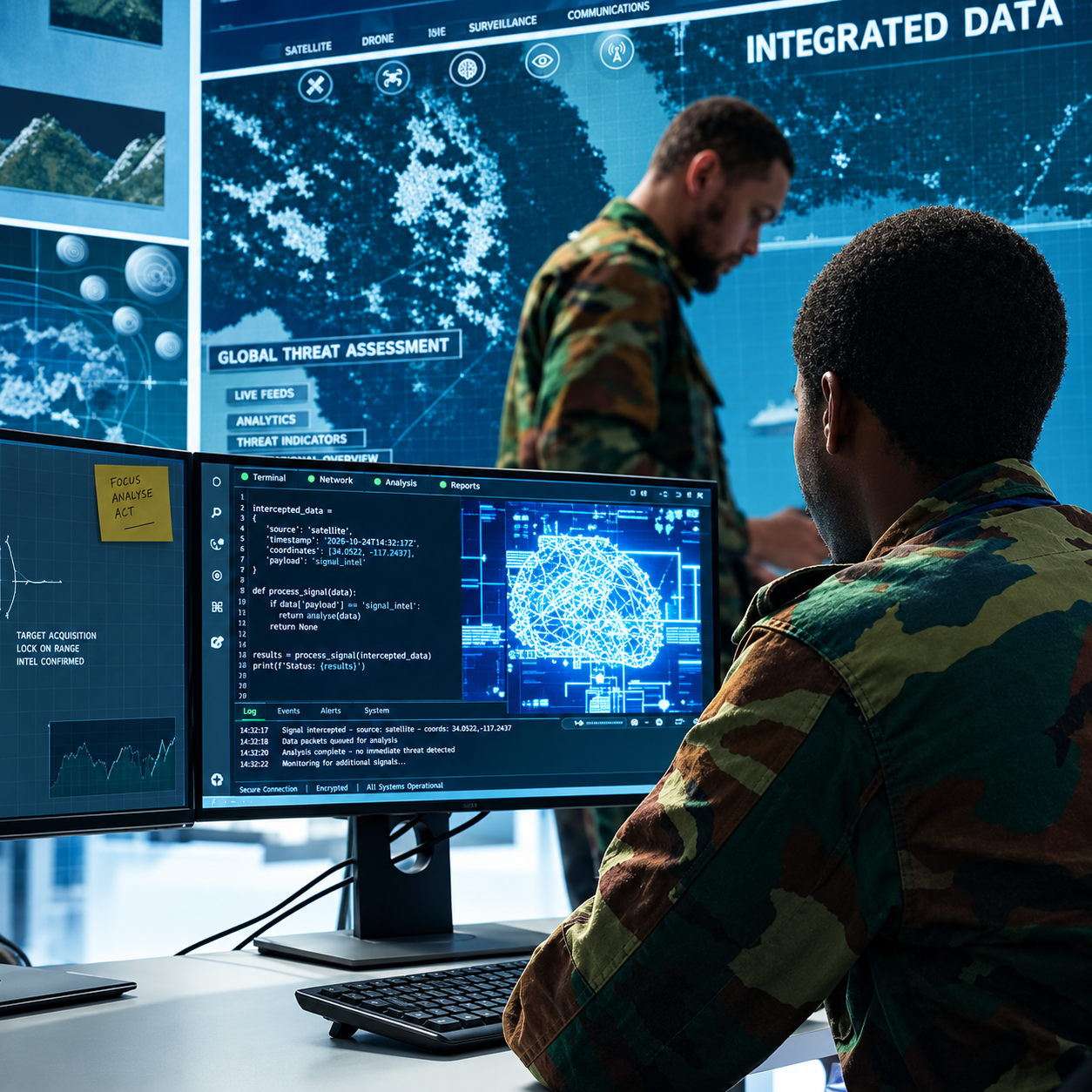



Gaming companies that want defense customers have two questions to settle before they hire anyone to lead that work. The first is whether defense partners will accept their shareholders. Krafton’s planned joint venture with Hanwha Aerospace reportedly collapsed in 2026 over concern about Tencent, which owns about 15% of Krafton. The second is whether defense work sits in a unit inside the company or in a separate company, a choice that sets the first senior hires and decides how easily the business can be sold. That ease of sale also serves defense companies, which want the same scarce leaders and can gain a whole team by buying a separate business. A gaming board that settles the two questions slowly may lose the people it wanted to such a buyer.
Before a gaming company hires defense leaders, it needs to know whether defense partners will accept its shareholders and where the business will sit.
In March 2026 Krafton, the South Korean developer of PUBG: Battlegrounds, signed an agreement with the defense manufacturer Hanwha Aerospace to develop physical AI, the technology that lets robots sense and act on their surroundings. They planned a joint venture. CEO Kim Chang-han said it could become a global defense firm like Anduril. Six months later, a Korean outlet reported that the venture had effectively collapsed. An industry source told it that fears of Chinese capital reaching sensitive defense information played a part, since Tencent, a Chinese group, owns about 15% of Krafton.
The trouble was co-ownership. A joint venture would have made Krafton part-owner of the new company, and behind Krafton stood Tencent. In January 2025 the Pentagon added Tencent to its list of Chinese military companies, a label Tencent called “clearly a mistake,” and that listing makes any defense venture with Tencent money in it a question for US buyers. Hanwha had reason to care. Its US arm agreed in August 2026 to supply Army artillery prototypes. A co-owner with Tencent behind it could have put that business at risk.
Licensing carries far less of that risk. Tencent owns a minority stake in Epic Games. Yet in December 2025 Lockheed Martin unveiled Prepar3D Fuse, a simulation tool built on a custom version of Epic’s Unreal Engine 5. The license does not tie Lockheed to Epic’s shareholders. Western studios with Tencent stakes, such as Larian and Remedy, face the same choice. They can license their technology to defense buyers. Or they can own a defense business alongside them.
The ownership question
How shareholder ties extend into a defense partnership
Select either arrangement to see which shareholders stand behind the defense partner.
Sep 2026Korean press reports the joint venture has effectively collapsed. A co-owner with Tencent behind it could have put Hanwha’s US Army business at risk.
No ownership linkThe license does not tie Lockheed Martin to Epic’s shareholders. The ownership chain ends at Epic.
Sources: Korea Herald; Sidae; Silicon UK; Korea Times; US Department of Justice; Lockheed Martin
That choice is the first of two questions a gaming company must settle before it hires defense leaders, and it asks whether the company’s shareholders allow it to own a defense business at all, or only to sell technology to one. The second is where that business sits, in a unit inside the company or in a separate one. Krafton had settled the second and chosen a separate company. The first, whether defense partners would accept its shareholders, is where the venture reportedly stalled.
Krafton faced that question in Korea, but European governments ask it as well, through investment screening. In June 2026 EU member states signed off on rules that will require each of them, from early 2028, to screen foreign investment in military equipment and dual-use items, which are goods and software with both civilian and military uses. The rules also cover money routed through EU subsidiaries. A European holding company offers no way around them. The UK already screens such deals under its National Security and Investment Act. Between April 2025 and March 2026, its government called in 60 acquisitions for review, and defense was linked to 47% of them. These reviews also apply to foreign bids for defense businesses. An open ownership question can therefore slow a later sale as well as a partnership.
Which Game Engines and Headsets Is the US Army Buying?
Neither question would arise unless defense buyers wanted gaming technology, and they want it because game players have already paid to build it. PwC’s Entertainment and Media Outlook put worldwide video game revenue at $224 billion in 2024, more than the movie and music industries combined, and expects nearly $300 billion by 2029. That money built the engines defense buyers now get ready-made. The US Army alone buys gaming technology in two forms. The older is training software. The Army’s Games for Training program runs on Virtual Battlespace, made by Bohemia Interactive Simulations, or BISim. Virtual Battlespace’s first two versions were built partly on the engines of Operation Flashpoint and Arma, two games from the Czech studio Bohemia Interactive, and the newest version is reaching more than 80 Army training sites under a July 2025 contract modification.
The market behind gaming technology
Worldwide video game revenue, 2024 actual and 2029 forecast
The 2024 figure is already more than the movie and music industries combined.
Source: PwC Global Entertainment & Media Outlook, July 2025
Headsets are the second form. The Army’s headset program, the Integrated Visual Augmentation System or IVAS, moved into production under a 2021 Microsoft contract worth up to $22 billion, with devices that came from Microsoft’s HoloLens 2, a commercially available headset. Then the program moved closer to gaming. In April 2025 the Army approved handing IVAS to Anduril. Anduril’s founder, Palmer Luckey, had earlier started Oculus, maker of the Rift gaming headset, and in May 2025 Anduril teamed up with Meta, maker of the Quest headsets, to build extended reality devices for the military.
From Microsoft to Anduril
How the US Army’s headset program moved toward gaming technology
Anduril’s founder, Palmer Luckey, started Oculus, maker of the Rift gaming headset. Meta makes the Quest headsets.
Sources: Breaking Defense; Defense News; Road to VR
How Do Gaming Companies Organize a Defense Business?
The studio behind Virtual Battlespace shows one way to organize defense work once a company’s shareholders clear the first question. The options are a separate company, owned alone or with a partner, or an in-house unit. Bohemia Interactive chose a separate company, as Krafton planned to. Improbable and Unity built units in-house.
Bohemia’s separate company dates from 2001, when the studio and a partner formed Bohemia Interactive Australia to build training software. By 2007 it had become Bohemia Interactive Simulations. The investment firm Riverside bought BISim in 2013. BAE Systems paid $200 million for it in 2022, when it employed more than 325 people. Because BISim stood apart, it changed owners twice without touching the studio. Its staff moved with it each time.
Bohemia Interactive Simulations
From game studio venture to BAE Systems subsidiary
The game studio Bohemia Interactive holds no stake in BISim today.
Sources: Bohemia Interactive wiki; Wikipedia; BAE Systems
Improbable’s defense business grew inside the company instead. Founded in London in 2012 to build simulations for game developers, Improbable later added defense work on both sides of the Atlantic, then shut the US side and left a UK arm still inside the company. Improbable had to carve that arm out before it agreed to sell it in June 2023 to investors led by NOIA Capital. Around 70 engineers and modelers went with it. That business is now Skyral.
Unity built its defense work in-house too and has kept it, through its Government and Aerospace offering, which includes extended reality training and digital twins. In 2021 three current and former Unity employees spoke to Vice. They feared their work could reach the military without their knowledge. The defense sales continued. They included a three-year, multi-million-dollar US defense deal with CACI in 2022.
Keeping the unit inside has kept Unity’s engineers. It has also kept military work beside game developers. The complaints to Vice came out of that closeness.
Four approaches
How gaming companies have organized defense work
Sources: BAE Systems; Shephard; Korea Herald; Sidae; PC Gamer; Unity
What Security Risks Do Gaming Companies Face in Defense Work?
Unity’s staff worried about where their work might end up. At Bohemia Interactive, the realism of the work drew a government’s attention. In September 2012 Greek police detained two of its developers on Lemnos, the island the studio was using as the model for the main map in Arma 3, and charged them with espionage after accusing them of photographing and filming military facilities. Both said they had been on holiday. They spent four months in prison before they were released on bail. Bohemia later renamed the island in the game to stress that the setting was fictional. The case involved the game studio, not BISim. If a game studio could end up in that position, one whose work touches defense needs someone to own the risk its people take when they travel and gather material. Game studios rarely employ anyone to do that.
That risk fell on two developers abroad. Today the threat reaches company leaders at home. In October 2026 the Financial Times reported that Western intelligence agencies had warned the heads of European defense companies that Russia was stepping up plots to kill them. Leaders of smaller companies, especially drone makers, were among the targets. Companies have since added personal security for senior executives. In our view, anyone a gaming company hires to lead defense work in Europe now takes on personal risk. A board recruiting for that position should expect to explain the risk to candidates, as well as the protection that comes with it.
Regulators and buyers also check where a supplier’s people and data sit. When BAE bought BISim, its staff worked in the US, the UK, Australia, the Czech Republic, Slovakia, and other countries. Every branch of the US military used its products. A supplier spread that widely would face more questions today about where its software is written and where its training data is stored. In the US, some of those questions are now contract terms. Since November 2025 the Pentagon has been phasing in a requirement that contractors handling controlled unclassified information meet a cybersecurity standard before they win work, first through self-assessment and later through outside certification, and prime contractors must pass it on to subcontractors that hold such data. A studio’s game systems may not meet that standard. Until its systems pass, the studio cannot win contracts that involve such information, so one of its first defense hires should be someone who can bring those systems up to standard.
Security therefore adds two things to what a gaming company must prepare. If it runs defense work itself, rather than only licensing its technology, it has to appoint a security and compliance lead and arrange protection for its senior people. Both should be in place before the first contract is signed.
The security question
Where defense work creates exposure for a gaming company
Sources: MCV; Meduza; BAE Systems; Mayer Brown
What Should Gaming Boards Decide Before Hiring Defense Leaders?
The cases, with Krafton’s, give a gaming board an order to follow. Ownership comes first. The board should ask its intended defense partners and customers early whether they will accept its shareholders. If they will not, licensing is safer. A licensing business needs only a sales lead who knows government buyers. A full defense team can wait. If they will, structure comes next.
An in-house unit starts with a head of defense who has sold to governments, because defense contracts run for years and are won through formal competitions. Game companies rarely employ such people. The unit also brings military work close to game developers, so the board should agree a stance on military work and tell staff before it hires.
A separate company needs a full leadership team. Its CEO must know military customers and game engines. Pete Morrison, BISim’s first CEO, had both. He had served in the Australian Army, and he later hired people he met modifying a computer game online to build Virtual Battlespace 2 in a garage behind a friend’s house. People like him are rare. A board may need to pair a defense CEO with a games technologist.
A separate company is also easier to sell. The BISim and Improbable sales differed on exactly that point. A board that expects to sell should lean toward a separate company. Its leaders must be able to run it under a new owner.
BISim’s leaders changed with each new owner. Morrison ran it as CEO while the Bohemia founders owned it. By his own account, product came first and running the business came second. That changed after Riverside bought the company in 2013. Arthur Alexion joined as CFO that year and later became co-CEO. That freed Morrison to concentrate on product and business development. Morrison has since said he lacked the skills to grow the enterprise. Under BAE he was chief product officer until he left in late 2025. In the early years BISim needed what a military background brings, which is realism, industry contacts, a common language with customers, and in some cases the right clearances. A sale calls for a leader with private equity or mergers and acquisitions experience. A board planning a separate company should expect such a change before any exit. Its search for the second leader should start early.
In-house unit or separate company, the board must judge candidates for unfamiliar roles. A director with defense experience can test their understanding of government sales. That director can also test how a candidate would protect the company’s people and data, which defense customers will ask about before the first contract. The board should add such a director before it interviews anyone.
The structure question
Structuring a defense business as an internal unit or a separate company
Select a stage in the development of the defense business to compare how each structure responds.
Sources: PC Gamer; Shephard; Tech.eu; Halldale; Bohemia Interactive wiki
Where Can Defense Companies Find Gaming Talent?
The same structures tell defense companies where to look. The people who have built defense products on game technology tend to sit in businesses that split off from game companies, more than in the studios themselves. BISim, now part of BAE Systems OneArc, and Skyral both employ them. Engine makers with defense teams, such as Unity, are the second place to look.
Sources of leadership talent
Where defense companies can find leaders with gaming experience
Sources: BAE Systems; Dealroom; Unity; GamesBeat
Games industry layoffs offer a larger pool, though it holds far more engineers than leaders. A forecast by Amir Satvat, reported by GamesBeat, puts 2026 layoffs at 14,259 and the total since 2022 at an estimated 58,087. Some of those laid off have shipped real-time 3D graphics to millions of players. Military simulations need that skill. Not all can work on classified projects, since US rules largely bar non-citizens. Recruiters should check eligibility first.
The engineering talent pool
Estimated games industry layoffs, 2022 to 2026 (projected)
Some of those laid off have shipped real-time 3D graphics to millions of players, the skill military simulations need.
Source: Amir Satvat’s games industry layoffs forecast, reported by GamesBeat, 2026
At senior level, eligibility can decide the whole search, because a candidate who cannot be cleared will not get a sensitive role. Then comes the question of whether the person can work the way defense programs run. Those programs last for years, on milestones agreed through formal procurement, and export controls such as the US International Traffic in Arms Regulations limit how technical data can be shared with foreign nationals, even colleagues in the same office. Games executives used to monthly updates must show they can work within those rules. Technical knowledge is only part of what the hiring company will look for.
Not every defense company needs to recruit gaming talent at all. One that partners with a gaming company instead, as Anduril has with Meta, needs a different person. That person runs the partnership from the defense side. They set out what soldiers need from a headset in the field and hold the partner to it. Trials with troops fall to them too, along with the call on when a device is ready to issue. The link between the device and the military systems it has to feed is theirs as well. The role is as much product as commercial, so it suits someone who has built consumer hardware and has also worked inside a military program.
Consumer hardware makers find out whether people will wear a device far earlier than the Army did with IVAS. A player who gets a headache in a headset sends it back, and the maker sees the problem in returns and reviews before the next production run. The Army found the same problem in 2022 field tests, after it had signed the production contract. Pentagon testers reported “mission-affecting physical impairments,” and more than 80% of soldiers who reported discomfort had symptoms within three hours. Someone who has shipped a consumer headset knows to look for that before production, and the partnership lead should have the authority to send a device back until troops are willing to wear it.
Why Are Gaming and Defense Companies Competing for the Same Executives?
Gaming boards look for their defense leaders in the same spin-offs and engine teams where defense companies search for gaming talent. Both sides want the few senior people who have built products for players and delivered them to military customers. That competition centers on simulation and extended reality and the software around them. A defense company hiring a shipyard director has little reason to look at game studios. Gaming and defense companies do not, however, hire at the same speed, because a defense company can take a whole team in one deal, as BAE did when it bought BISim, while a gaming board hires one leader at a time. Each hire waits on whatever the board has not yet settled.
The difference in speed is why a gaming board should settle ownership and structure before it starts a search. A board that has not asked whether defense partners will accept its shareholders cannot tell a candidate whether the job is selling licenses or running a defense business. Few senior candidates will wait while the board finds out. Structure leaves the same candidate with a second unanswered question: who they will report to, and whether the defense business might one day be sold with them inside it. A board that has not chosen between an in-house unit and a separate company cannot answer either. Of the two questions, structure is the board’s own to decide. The ownership answer belongs to shareholders and to the defense customers of any partner, which is the reason to ask for it before the first interview.
Recommended actions
Executive hiring priorities for gaming and defense companies
About the Authors
Adrian Czerny is a Partner at Stanton Chase Stuttgart and the Global Subsector Leader for Aerospace and Defense. He connects aerospace and defense companies with leaders who combine technical knowledge and management skill. His international background helps him find executives for A&D organizations worldwide.
Sam Selker is a Director at Stanton Chase and its Global Subsector Leader for Gaming. He helps studios and publishers find the senior leaders who will run them next, drawing on executive search, succession planning, board advisory, leadership assessment, and executive onboarding. He is also a lifelong gamer, and his son is following him into it. If your studio is weighing its next senior leadership hire, he would like to hear about it.
Dillon Werry is an Associate Partner at Stanton Chase Prague and the Regional Functional Leader for Startups and Scale-Ups in EMEA. He has more than 15 years of experience in recruitment and executive search, much of it in technology, and focuses on the Technology and Consumer Products and Services practices. A native English speaker with advanced Czech, he has worked for Czech-owned organizations as well as international recruitment firms.
Our practices
Our gaming and aerospace and defense expertise
Hover over a practice to learn more.
 Gaming
Leadership advisory for game studios, publishers, and platforms, from senior appointments to succession planning and board advice.
Visit the Gaming page
 Aerospace and Defense
Leadership advisory for aerospace and defense companies, with a focus on leaders who combine technical knowledge and management skill.
Visit the Aerospace and Defense page
How Can We Help?
At Stanton Chase, we're more than just an executive search and leadership consulting firm. We're your partner in leadership.
Our approach is different. We believe in customized and personal executive search, executive assessment, board services, succession planning, and leadership onboarding support.
We believe in your potential to achieve greatness and we'll do everything we can to help you get there.
View All Services