

In the last of four interviews, Dietrich Hauffe, Global Sector Leader for Life Sciences and Healthcare at Stanton Chase, talks to Sebastian Kracht, Senior Director Global Customer Experience at Abbott Diabetes Care, about the personal side of leadership. Sebastian explains why his biggest lessons came from change and lateral moves, including an acquisition at Johnson & Johnson and an overnight product recall at Bausch & Lomb. He shares the habits that keep his thinking current, from 360 surveys to working with a coach, and what he believes the people he mentors need to hear.
Sebastian Kracht’s biggest leadership lessons came from periods of change and from lateral moves that a strictly vertical career would have skipped.
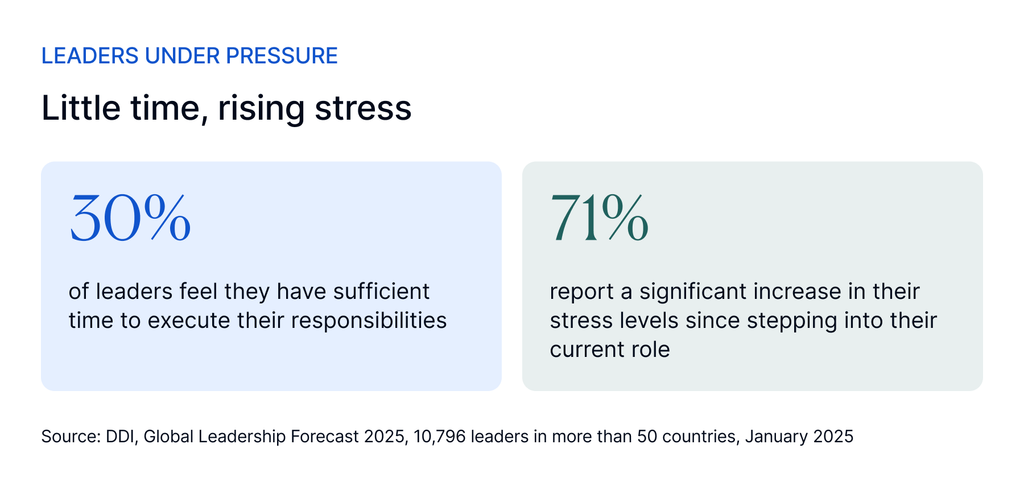
Senior leaders rarely get time to step back and think. DDI’s Global Leadership Forecast 2025, based on more than 10,000 leaders, found that only 30% feel they have enough time to carry out their responsibilities. The same research found that 71% reported a significant rise in stress since stepping into their current role.
Sebastian Kracht, Senior Director Global Customer Experience at Abbott Diabetes Care, makes time for that kind of reflection despite the pressure. In the last conversation of this series, I asked him what his own career has taught him about reinvention and the personal side of leadership.
Why Lateral Moves Make Better Healthcare Leaders
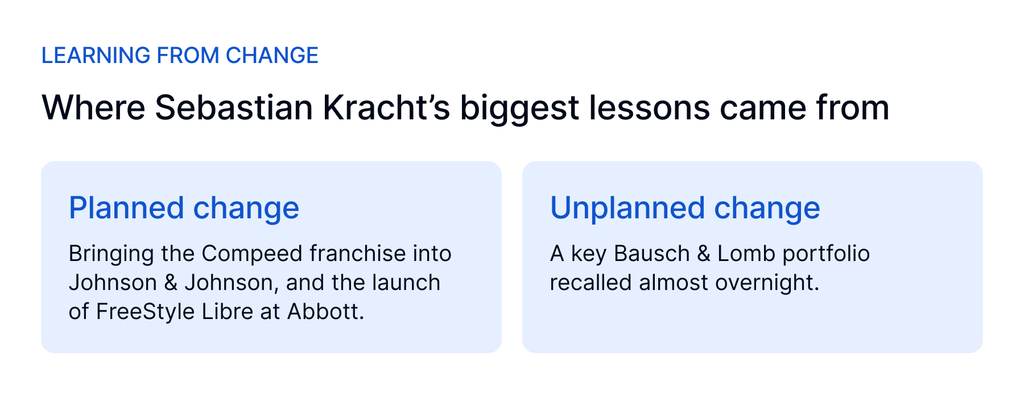
“Many times, you may hear that a good career is the consequence of a straight or vertical rise through the ranks,” Sebastian says. “Ironically, for me, the greatest learning opportunities came with change.” Some of that change was planned, such as an acquisition at Johnson & Johnson and the launch of FreeStyle Libre at Abbott. Other change arrived without warning, as when much of his portfolio at Bausch & Lomb was recalled almost overnight.
He also chose lateral moves at several points in his career. “I have learned a lot from doing this first-hand, and I feel that is irreplaceable,” he says. Those moves were not always welcome. “I have occasionally been frowned upon for not wanting to follow a straight line in my career.” He believes the systems companies use to manage careers make lateral moves harder to justify. “Personnel evaluation scales and HR IT systems are many times locked into a way of operating where the only consideration is the next vertical transition.”
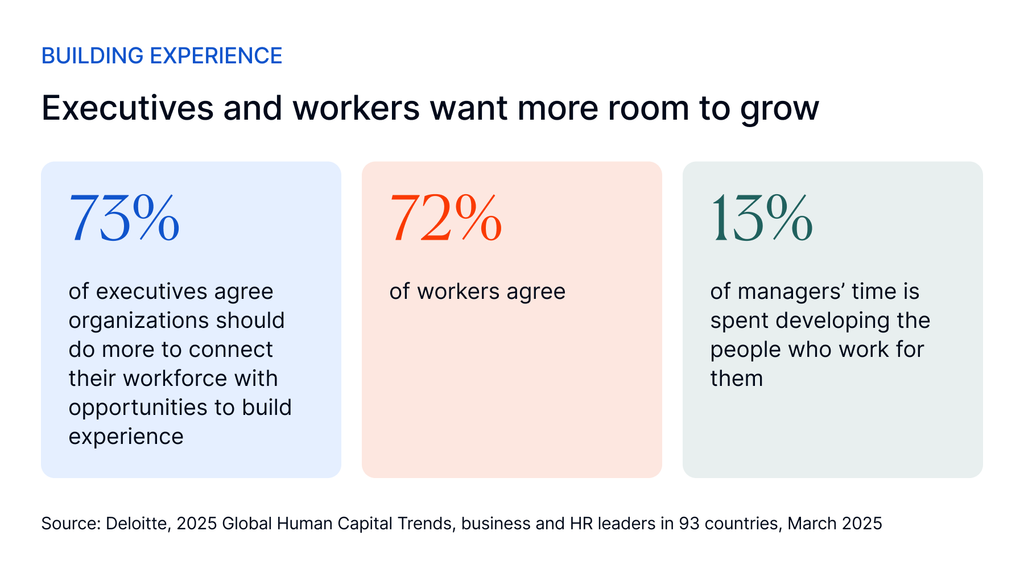
Executives and workers appear to want more room for broad experience than those systems allow. In Deloitte’s 2025 Global Human Capital Trends research, 73% of executives and 72% of workers agreed that organizations should do more to connect their workforce with opportunities to build experience.
For Sebastian, breadth also changes how people respond to a leader. “Everyone is more likely to be led by someone who speaks their language,” he says, “someone who has, let’s call it, cross-company empathy.”
What Stepping Back Teaches a Senior Leader
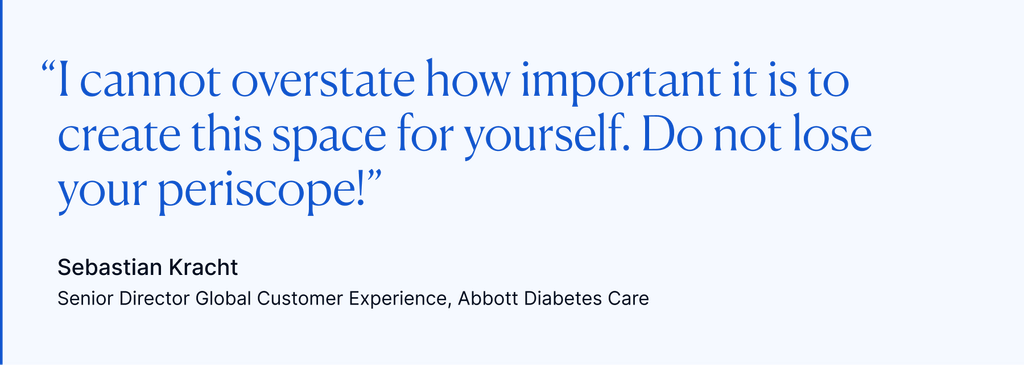
Sebastian has also stepped back at points in his career to rethink where he fits, and he values the perspective it gave him. “Taking the step back may add perspective,” he says. “For me this was essential. I cannot overstate how important it is to create this space for yourself.” Rushing on to the next task, he warns, has the opposite effect. “Do not lose your periscope!”
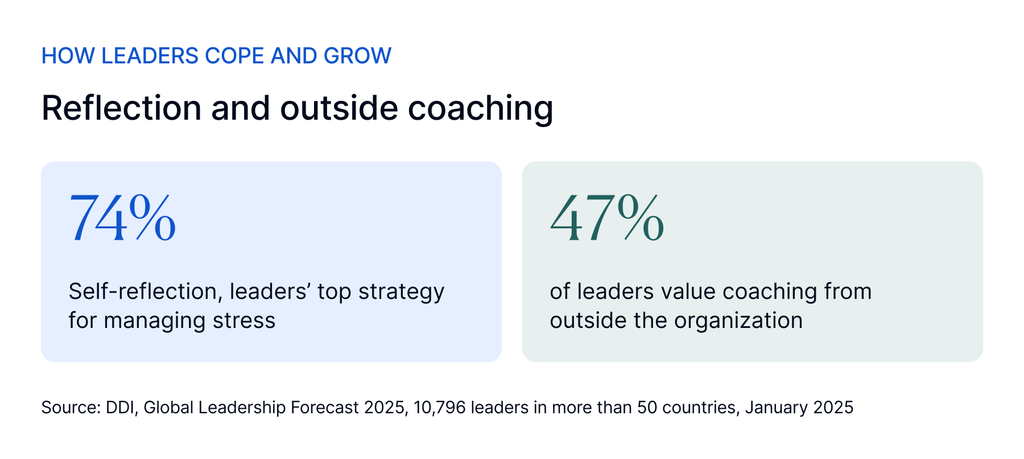
Other leaders rely on the same habit when pressure builds. In the DDI research, self-reflection was leaders’ top strategy for managing stress, at 74%.
How Experienced Leaders Can Keep Their Thinking Current
Stepping back is one of several habits Sebastian uses to keep his thinking current. “Always make time for an honest, sometimes brutal, look at what you call success,” he says. He judges success over a long period instead of the last quarter, and he looks for feedback from outside the business, especially from customers. “Walk in the shoes of your consumer and customer,” he says. “They will teach you time and time again what it takes to be successful in that marketplace.” He also watches what adjacent categories do and questions whether traditional KPIs still tell him enough.
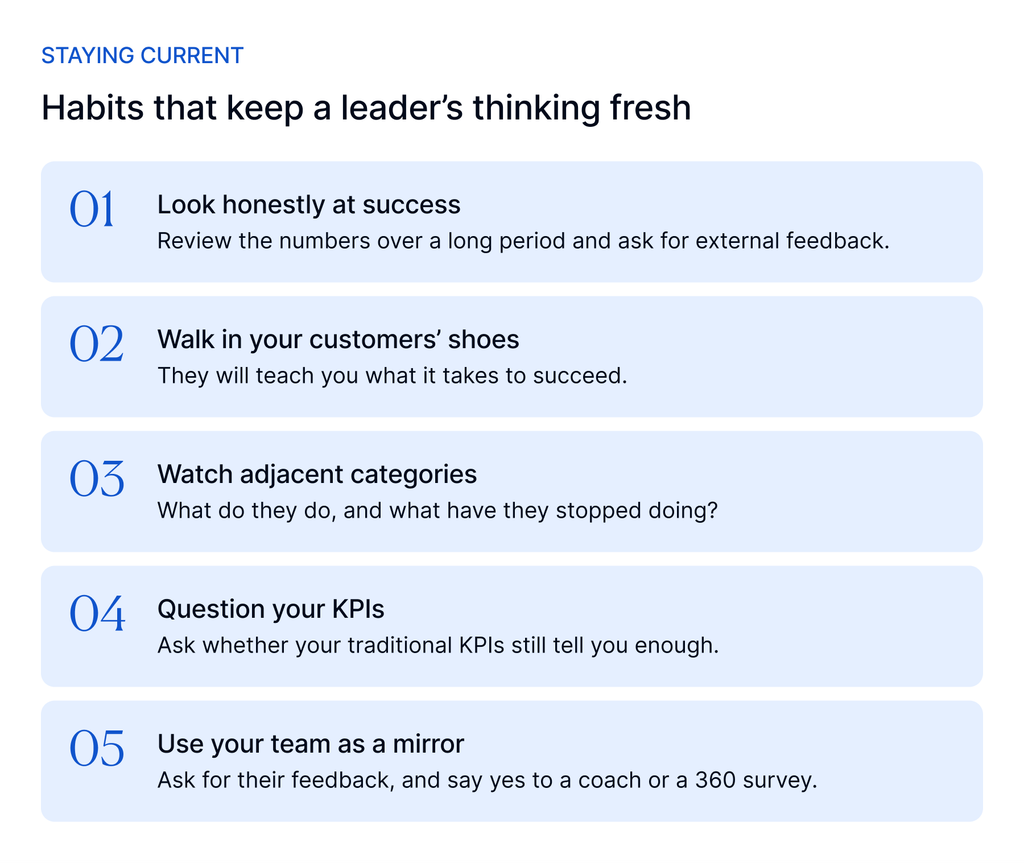
His own team is another source of feedback. “They work with you more than anyone else,” he says. “If well organized in an atmosphere of trust, they can be an incredibly good mirror to what is working and what is not.” He urges leaders to accept a coach when one is offered and to take part in 360 surveys with direct reports and peers. “If you are doing a good job, if you are investing in your people, these surveys will turn into a tool you can use to fine-tune how you are operating.” DDI found that 47% of leaders value coaching from outside the organization.
What Do the People You Mentor Need to Hear?
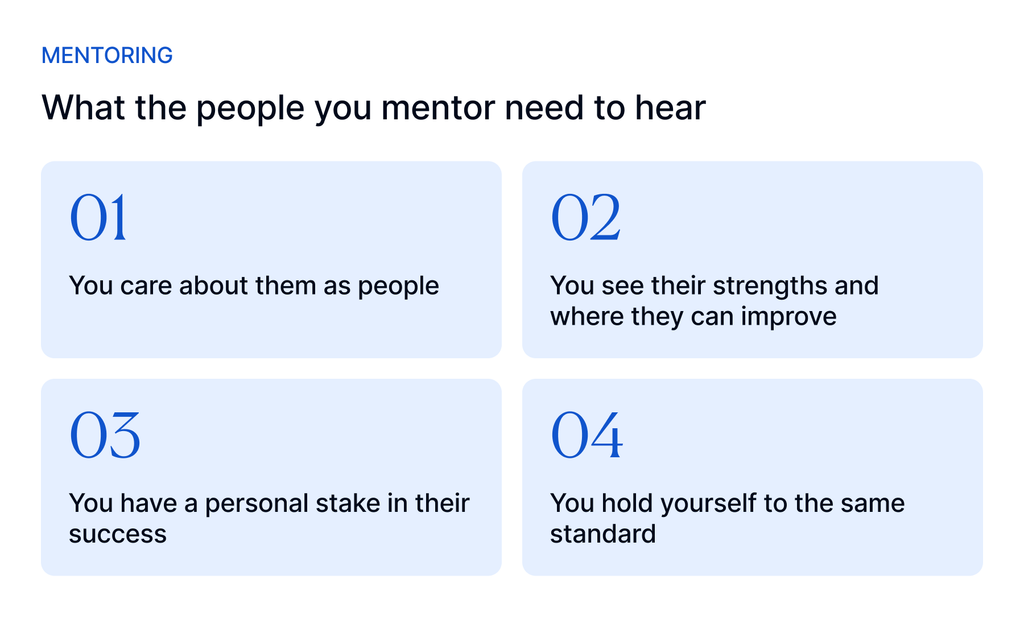
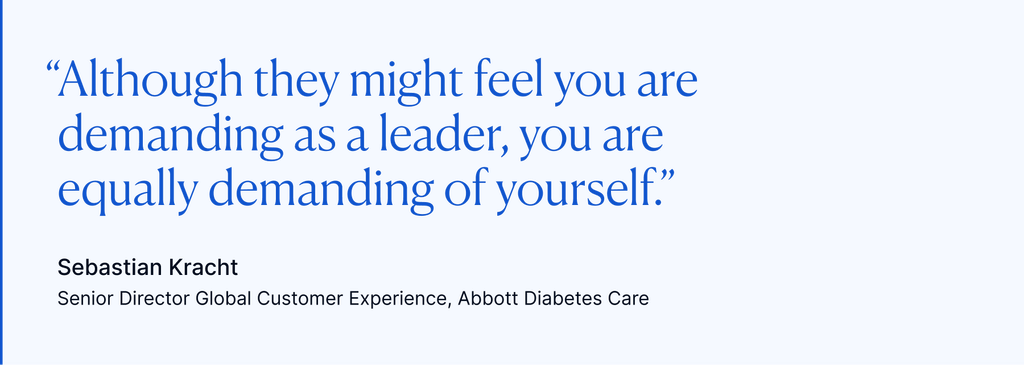
Sebastian brings the same openness to feedback into the way he mentors others. “They need to hear that you are interested in them as a human being, not solely as an employee,” he says. “Let them know you care and let them know you have a stake in their success.” He also believes feedback deserves time and care. “Take the time to share your feedback constructively with them, not just tell them in a rushed, time-constrained setting.” One message has always worked for him. “Although they might feel you are demanding as a leader, you are equally demanding of yourself.”
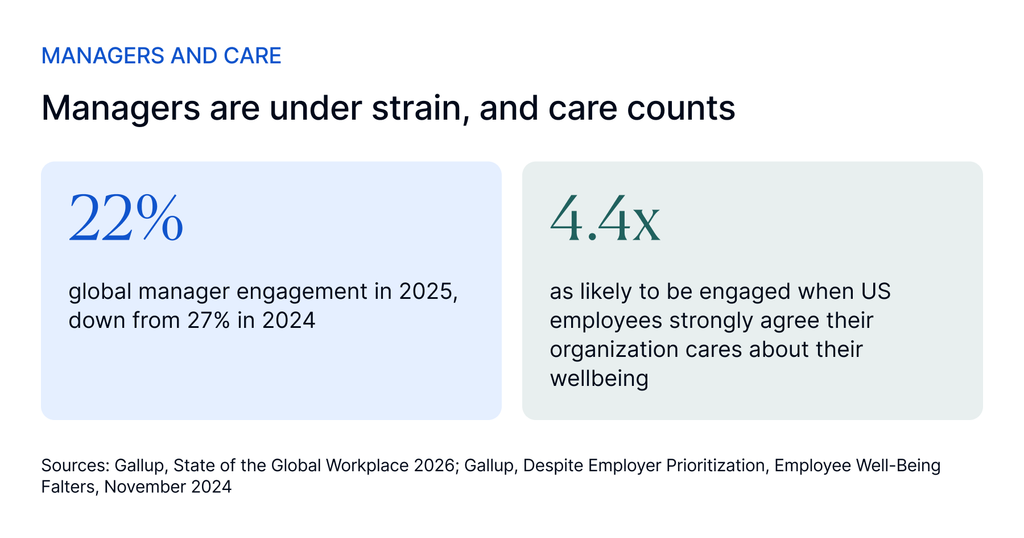
Mentoring of this kind is scarce in many organizations. Deloitte’s research found that managers spend only 13% of their time developing the people who work for them. Gallup’s State of the Global Workplace 2026 report says global manager engagement fell from 27% to 22% between 2024 and 2025. Gallup has also found that employees who strongly agree their organization cares about their wellbeing are 4.4 times as likely to be engaged at work.
What This Means for Senior Healthcare Appointments
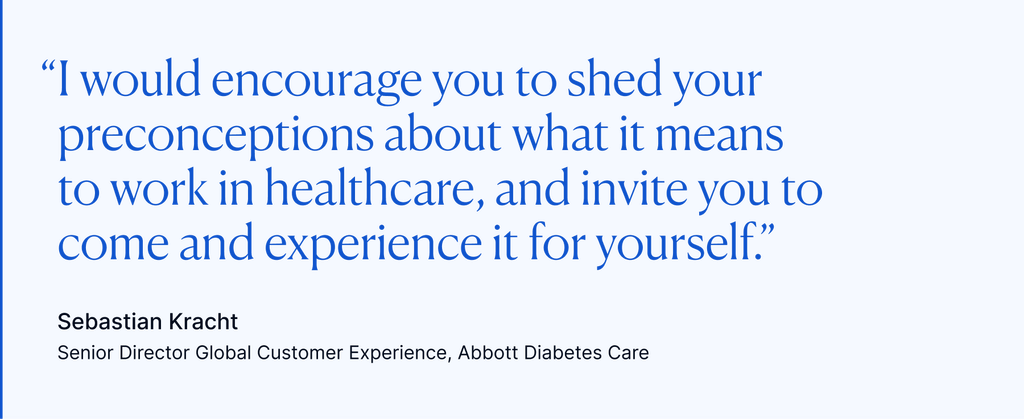
Looking back, Sebastian would question his own early view of healthcare as a stuffy, slow niche. “I would encourage you to shed your preconceptions about what it means to work in healthcare,” he says, “and invite you to come and experience it for yourself.”
His career also holds a lesson for boards. Lateral moves and periods of crisis left a clear mark on the way he leads, yet both would be easy to miss in a CV screened only for vertical progress. Our Life Sciences and Healthcare practice supports clients on senior appointments through executive search and leadership advisory, and we read the human story behind each candidate’s career as carefully as the titles on it.
About the Author
Dietrich Hauffe, Ph.D., is a Partner in Stanton Chase’s Düsseldorf office. He is the firm’s Global Sector Leader for Life Sciences and Healthcare and Global Subsector Leader for Biotechnology, and he also specializes in marketing and sales appointments. His expertise covers analytical technology, biotechnology, biopharmaceuticals, diagnostics, medical devices, and bioinformatics, and he worked in North America for more than a decade.
How Can We Help?
At Stanton Chase, we're more than just an executive search and leadership consulting firm. We're your partner in leadership.
Our approach is different. We believe in customized and personal executive search, executive assessment, board services, succession planning, and leadership onboarding support.
We believe in your potential to achieve greatness and we'll do everything we can to help you get there.
View All Services