





Stanton Chase’s Latin American Consumer Products and Services team asked five executives how shoppers in the region are changing. Martín Ferrara of Bimbo, Domenico Filauri of Mondelez, and Nathalie Schol of Coca-Cola spoke from food, snacks, and beverages, while Bruna Veneziano, former CMO of Skala, and Carolina Gormezano Frenkiel of Kimberly-Clark spoke from personal care. They describe an intentional consumer who spreads purchases across many channels and saves hard on basics while paying more for indulgence and innovation. Hard discounters now take more than 20% of retail sales in Colombia, and stores are becoming media and data channels. AI shopping agents are also expected to influence which brands get recommended. Consumer goods companies therefore need commercial leaders who combine marketing and sales skills and think like general managers, with data and AI built into everyday decisions.
Latin American shoppers now spread their grocery spending across more channels and price points. Five consumer goods executives explain what that means for the sales and marketing leaders companies hire.
Stanton Chase’s Consumer Products and Services team in Latin America recently interviewed five executives who see these changes up close. Martín Ferrara is VP Marketing Latin Sur at Bimbo. Domenico Filauri is Managing Director for Mondelez in Colombia and Director of Sales Excellence for the WACAM region. Before that, he was General Manager for Colombia and the Andean Region at Unilever. Bruna Veneziano was CMO of Skala. At the Brazilian hair care company, she led a repositioning that made Skala a respected name in Brazil and abroad. Nathalie Schol is Senior Marketing Director at Coca-Cola for Chile, Bolivia, and Paraguay. Carolina Gormezano Frenkiel is Latin America Marketing Director at Kimberly-Clark, where she leads the Huggies business across the region.
Although their categories and countries differ, all five describe a shopper who now buys in far more places. Kantar’s panel data puts a figure on that spread. Latin American shoppers visited an average of 8.3 channels during 2024. E-commerce and discounters led the growth in purchase volumes.
Interactive
Shopping across channels
Latin American shoppers spread their spending across many channels
Choose a shopping mission to see where it happens.
Stocking up might happen at a wholesaler. In diapers, e-commerce suits planned purchases of large packs and subscriptions.
Topping up often happens on the routine supermarket trip.
Urgent needs go to the corner store or to quick commerce, such as running out of diapers at 10 p.m.
Before buying, mothers research diapers and ask for recommendations in WhatsApp groups.
8.3
channels a year visited on average by Latin American shoppers in 2024
9 to 10
channels a month used by many shoppers in Colombia, according to Domenico Filauri of Mondelez
E-commerce and discounters led the growth in purchase volumes. Sources: Kantar, January 2025; Stanton Chase interviews with Martín Ferrara (Bimbo), Domenico Filauri (Mondelez), and Carolina Gormezano Frenkiel (Kimberly-Clark)
How Are Consumer Habits Changing in Latin America?
“The biggest change is that the Latin American consumer has become a far more intentional consumer,” Martín says. “They don’t necessarily buy less. They buy in a much more deliberate way.” Shoppers now decide what to buy, where, in which pack size, and when. A stock-up trip might happen at a wholesaler and a top-up at the supermarket, with urgent needs met at the corner store and some categories bought online.
Domenico calls this channel surfing. Many Colombian shoppers already use nine or ten channels a month, he says, whereas a few years ago their shopping was concentrated in neighborhood stores and large supermarkets.
Nathalie sees the mix of shopping trips changing too. Purchases for immediate consumption and convenience have grown from 6.8% to 8.5% of spending, she says, while pantry purchases have dropped from 35.5% to 34.1%. For brands, that means thinking less about traditional categories and more about the moments when people consume.
Spending has split in two as well. “The consumer saves aggressively wherever they see no relevant difference,” Martín says, “but at the same time is willing to pay more where they find innovation, quality, indulgence, healthier options, or a better experience.” Private label and premium are both growing. Mainstream brands feel squeezed in the middle.
NielsenIQ reports private label value growth of 14.2% in Latin America, against 5.6% globally. Domenico sees this in household basics. He puts private label at close to 60% of the detergent category.
Nathalie describes shoppers who watch their budgets closely and compare alternatives more actively before they buy. She notes that mass consumption fell 2.7% in the 12 months to June 2026, and that 44% of consumers expect to find an offer before making a purchase. “However, it would be a mistake to interpret this only as a search for price,” she says. Brand remains important for 43% of consumers, especially among Gen X and baby boomers.
Private label
Private label is growing faster in Latin America than worldwide
Private label value growth
99.2%
of Colombian households buy private label products
Source: NielsenIQ, Private Label Study in Latin America, December 2024
Treats are a different matter. Domenico talks about pampering, the small reward people give themselves after working hard. There, brand and exclusivity carry more weight. Bruna sees a similar split in hair care. Price, yield, promotions, and trust in the brand weigh heavily in shampoo purchases. For masks and styling products, shoppers pay for results. Her shopper moves freely between brands and combines products to suit her needs. When one fails to deliver, she replaces it.
Carolina sees the same value test in diapers, where shoppers increasingly weigh cost per use. “If a diaper leaks and needs to be changed more frequently, it ultimately becomes more expensive,” she says. Promotions still drive volume, but in her experience they tend to make shoppers buy earlier and stock up rather than switch brands.
Value and premium
Shoppers save on some purchases and spend more on others
Categories where they see no relevant difference
Household basics such as detergent
Shampoo, where price, yield, promotions, and brand trust weigh heavily
Innovation and quality
Indulgence and small treats
Healthier options and better experiences
Hair masks and styling products that show results
44%
of consumers expect to find an offer before they buy
43%
say brand remains important, especially among Gen X and baby boomers
Source: Stanton Chase interviews with Martín Ferrara (Bimbo), Domenico Filauri (Mondelez), Bruna Veneziano (former CMO, Skala), and Nathalie Schol (Coca-Cola)
Hard Discount Chains Have Become Major Customers for Consumer Goods Companies in Colombia
In Colombia, D1 opened its first store in 2009. This year the three large hard discount chains are set to pass 4,700 stores, and they already account for more than 20% of retail sales, according to La República. Domenico says discounters can now rank among the largest customers of a mass consumer goods company in Colombia. Supermarket chains used to fill those spots.
Discounters have also moved upmarket. They now add indulgent and more premium lines to their basic ranges. Supermarkets have sharpened their own offers in response. For suppliers, one plan per channel won’t do anymore. “Each of my customers has a strategy that I have to support,” Domenico says. That can mean different SKUs for each customer.
Hard discount in Colombia
Hard discount has grown into a pillar of Colombian retail
2009
D1 opens its first store in Colombia
4,700+
stores expected across the three large hard discount chains in 2026
Each icon represents 100 stores
Sources: La República, February 2026; Stanton Chase interview with Domenico Filauri
Martín adds that formats vary across the region. Argentina has a long tradition of wholesalers and value formats. Shoppers in Peru and Chile are especially omnichannel. Colombia and Ecuador lead Latin America in hard discount. Bruna points to Kantar data on Brazilian hair care. There, supermarket chains and cash-and-carry stores are gaining shoppers and purchase occasions.
Carolina counts cash and carry and neighborhood stores among the fastest-growing formats, with traditional supermarkets increasingly squeezed between them and hard discount. Larger diaper packs in cash and carry make a big difference to cost per unit, while neighborhood stores win on proximity. In Peru, her team worked on lowering the absolute purchase price with smaller packs for traditional trade, because many families there shop based on the income they have available each day. Nathalie has seen regional supermarkets gain relevance through their closeness to shoppers and the variety they offer.
Formats across the region
Each Latin American market favors different store formats
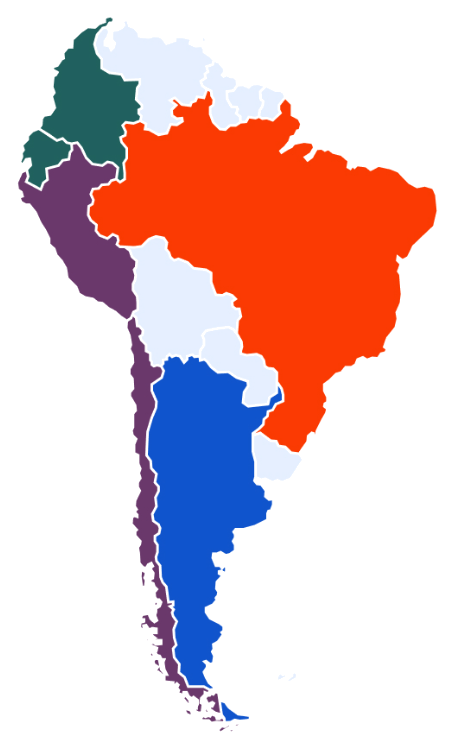
Sources: Stanton Chase interviews with Martín Ferrara (Bimbo), Bruna Veneziano (former CMO, Skala), citing Kantar hair care data, and Carolina Gormezano Frenkiel (Kimberly-Clark)
Physical Stores Are Taking on New Roles in Latin America’s Omnichannel Shopping
“The physical point of sale is not disappearing,” Martín says. “It is changing its function.” Besides selling, the store now serves as a media channel, a data source, a logistics hub, and one of the last places where a brand can win the sale. Retailers sell audiences and data alongside products through retail media. Martín says this is changing how manufacturers and retailers deal with each other.
The physical store
The store now does far more than sell
Point of purchase
Media channel
Data source
Logistics hub
Place for experience
One of the last places to win the sale
“The physical point of sale is not disappearing. It is changing its function.”
Martín Ferrara, VP Marketing Latin Sur, Bimbo
Source: Stanton Chase interview with Martín Ferrara, Bimbo
For Bruna, the store is where shoppers confirm what they found online. They often arrive informed, then test fragrance and texture before they buy. This explains which categories go digital. In hair care, shoppers are more open to buying masks and styling products online once they know them and find a better price. Shampoo and conditioner stay tied to the routine supermarket trip. Martín sees personal care and home care doing well online. Fresh food trails because shoppers want to judge ripeness and quality for themselves.
Carolina makes the same point as Bruna. Mothers research diapers and ask for recommendations in WhatsApp groups, and many watch reviews before they switch brands. “The physical store is no longer necessarily where the purchasing decision is made,” she says. “Instead, it has become the place where that decision is either confirmed or lost.” Out-of-stocks now cost far more, because shoppers can switch brands or retailers very quickly. Nathalie says 20% of shoppers use their phones inside the store to look up information or support their decisions.
Digital and physical
Which categories are moving online
More open to online
Personal care
Home care
Hair masks and styling products, once shoppers know them and find a better price
Diapers bought in large packs or on subscription
Still anchored in stores
Shampoo and conditioner bought on the routine trip
Fresh food, where shoppers judge ripeness and quality
New products, where shoppers test fragrance and texture
Sources: Stanton Chase interviews with Martín Ferrara (Bimbo), Bruna Veneziano (former CMO, Skala), and Carolina Gormezano Frenkiel (Kimberly-Clark)
Domenico wants channels to support each other. A Mother’s Day bundle of three or four products is simpler and cheaper to run as a digital combo, he explains, whereas the same offer in store would need special multipacks. With a pharmacy chain as a partner, a shopper who asks for the digital deal at the counter can still get it. “When you see it that way, you will be surprised by the good results,” he says. Neighborhood shopkeepers now order through digital tools too. That helps keep products on the shelf.
Carolina sees online channels serving different shopping missions. In diapers, e-commerce suits planned purchases of large packs and subscriptions. Quick commerce covers urgent needs, “such as running out of diapers at 10 p.m.,” so portfolios have to be designed for each. Nathalie also sees integration rather than substitution. Retailers that also run physical stores take 81.4% of measured online spending, she says, which shows how the two complement each other.
How Will AI Change the Way Latin American Shoppers Choose Brands?
Martín expects AI to enter the relationship between brands and retailers. “A consumer will be able to say, ‘I need to sort out my family’s breakfast for this week, eating well and spending less than X,’” he says. In his view, an AI agent will then compare brands, prices, promotions, availability, and reviews before it recommends what to buy.
Brands will still need to be familiar to people. They will also need to be easy to recommend inside digital and AI ecosystems. That calls for better product data, clear claims, flawless availability, and a value proposition that is simple to understand. “When an agent can compare a hundred options in seconds, being mediocre will be far more dangerous,” Martín says.
Interactive
AI and the shopper
When an AI agent does the shopping
Step through what the agent does with a shopper’s request.
“I need to sort out my family’s breakfast for this week, eating well and spending less than X.”
The request
The shopper describes a need in plain words and hands the job to an AI agent.
The agent weighs brands, prices, promotions, availability, and reviews against that need in seconds.
It recommends what to buy. “When an agent can compare a hundred options in seconds, being mediocre will be far more dangerous,” Martín says.
What brands will need
Source: Stanton Chase interview with Martín Ferrara, Bimbo
Retailers gain ground because they control first-party data, retail media, pricing, and the moment of purchase, while brands still have demand, trust, innovation, and emotional connection on their side. Martín warns traditional brands about what he calls the middle trap. If a brand costs more than private label and shoppers can’t see why, that brand has a problem.
Carolina expects the pressure on brands to grow. Private labels are becoming more sophisticated and moving beyond their role as cheaper alternatives, while retailers increasingly operate as media and data companies. Brands without a clear, differentiated value proposition “risk being squeezed between private labels and market-leading brands,” she says. As AI tools and content creators influence more shoppers, brands also need to be present wherever recommendations and purchasing decisions are made.
What Should Consumer Goods Companies Look for in Sales and Marketing Leaders?
These changes all reach the commercial team. “Marketing used to manage consumers and sales used to manage customers,” Martín says. “Today that division falls short.” Marketing leaders now need data and digital skills, along with command of the P&L, pricing, channels, customers, and execution. Sales leaders in turn need consumer and shopper insight and a grasp of brand building, plus fluency in data and innovation. In Martín’s view, the best candidates can think like general managers, whether they started in marketing or in sales.
Commercial leadership
Marketing and sales leaders are converging on one profile
“Marketing used to manage consumers and sales used to manage customers. Today that division falls short.”
Martín Ferrara, VP Marketing Latin Sur, Bimbo
Source: Stanton Chase interview with Martín Ferrara, Bimbo
Bruna sees the same profile. Leaders have to move between brand building, margins, inventory, and execution. They need to see how a decision in one area affects the others. “Technical expertise becomes more valuable when combined with the ability to mobilize and align people,” she says. Martín lists data and analytics, AI, revenue growth management, e-commerce, trade and shopper marketing, route to market, and retail media as the capabilities that count today. For Bruna, the value comes from making those capabilities work as one.
Carolina’s own career fits that profile. She worked in sales, from key accounts to cash and carry and indirect channels, before she returned to marketing, and she says that experience made a significant difference to how she approaches the business. “The boundaries between these functions are becoming increasingly blurred,” she says. At the top of her list of leadership competencies is an integrated business perspective that connects P&L management with channels and consumer understanding. Learning agility and people leadership complete it. Nathalie’s list starts with the ability to turn data into concrete decisions, followed by a thorough understanding of consumers and shoppers and the skill to run strategies that join physical and digital channels.
Domenico warns against treating AI as a line on a CV. “It’s like when people used to ask, ‘Do you know Excel?’” he says. A certificate proves little. “This is live, and it is already part of your job.” He looks for people who handle ambiguity, stay open to change, learn on the fly, and keep a medium- and long-term view. Experience counts for more again. “We moved past the moment when we believed renewing talent meant bringing in only recent graduates,” he says. “Today there is great value in people who have experience and also the capacity to transform.”
Personal care leaders said much the same in our July article on beauty in Latin America. María Andrea Vargas of Natura called for hybrid profiles that move across marketing, data, consumer insight, and sales. She also named learnability as essential in every function, which is close to what Domenico calls learning on the fly. Omar Cardenas of L’Oréal added that commercial selling methods had been the slowest to change.
Interactive
Leadership competencies
What five consumer goods executives look for in leaders
Select an executive to see the three competencies they named.
 Martín FerraraVP Marketing Latin Sur, Bimbo
 Domenico FilauriManaging Director Colombia, Mondelez
 Bruna VenezianoFormer CMO, Skala
 Carolina Gormezano FrenkielLatin America Marketing Director, Kimberly-Clark
 Nathalie ScholSenior Marketing Director Chile, Bolivia, and Paraguay, Coca-Cola
Source: Stanton Chase interviews with Martín Ferrara, Domenico Filauri, Bruna Veneziano, Carolina Gormezano Frenkiel, and Nathalie Schol
Which Commercial Leaders Will Latin American Consumer Goods Companies Need Next?
Taken as a whole, the interviews describe one kind of leader. That person thinks like a general manager and reads the shopper across every channel. Leaders like this also keep the brand worth its price. Domenico sees a clear divide between brands that keep evolving and those that don’t. The others, he says, will keep relying on “pay for one, take two” and 50% discounts, “and the only thing that will do is keep eroding your brand and your profitability.”
Boards and CEOs hiring a Chief Commercial Officer, Chief Marketing Officer, sales director, or country general manager in Latin America can use these interviews as a test. Ask candidates how they would win with a shopper who uses nine or ten channels a month. Ask how they would get their brand recommended by an AI agent. Stanton Chase’s Consumer Products and Services team in Latin America supports FMCG companies with executive search and executive assessment for these commercial roles.
Martín gives the last word to people. “Paradoxically, the more powerful the technology becomes, the more valuable essentially human capabilities will be.”
About the Authors
Camila Vargas is a Managing Director at Stanton Chase Bogotá and Regional Sector Leader for Consumer Products and Services in Latin America. She joined Stanton Chase in 2017 and brings more than 15 years of consulting experience in branding and talent, working across executive search and executive assessment. She leads the Latin American Consumer Practice Group and also works with clients in Technology and Life Sciences and Healthcare.
Juliana Sala is a Principal at Stanton Chase São Paulo, where she works as an executive search consultant and leadership advisor. She has led many C-level and senior searches in Consumer Products and Services, especially in finance, HR, marketing, and sales roles. An attorney by training, she began her career at a Big Four firm before moving into executive search.
Valeria Cox is an Advisory Partner at Stanton Chase Santiago and Regional Functional Leader for Inclusive Leadership and Culture in Latin America. A marketing executive with more than 20 years of experience in strategic planning, market research, consumer behavior, customer experience, and loyalty, she works with clients in Consumer Products and Services and Supply Chain and is a member of the firm’s Board Services practice, where she advocates for gender diversity on boards. She holds a business administration degree from Universidad de Los Andes and a master’s degree in consumer behavior from Universidad Adolfo Ibáñez.
Ezequiel Palacios is a Managing Director at Stanton Chase Buenos Aires and Stanton Chase Montevideo. He supports local, regional, and multinational companies with executive search and leadership projects, including C-level searches, succession planning, and leadership assessment, and works with clients in Consumer Products and Services. Before joining Stanton Chase, he worked at a top-tier global consulting firm. He holds a degree in Business Administration from Universidad de Buenos Aires, where he graduated magna cum laude.
How Can We Help?
At Stanton Chase, we're more than just an executive search and leadership consulting firm. We're your partner in leadership.
Our approach is different. We believe in customized and personal executive search, executive assessment, board services, succession planning, and leadership onboarding support.
We believe in your potential to achieve greatness and we'll do everything we can to help you get there.
View All Services