
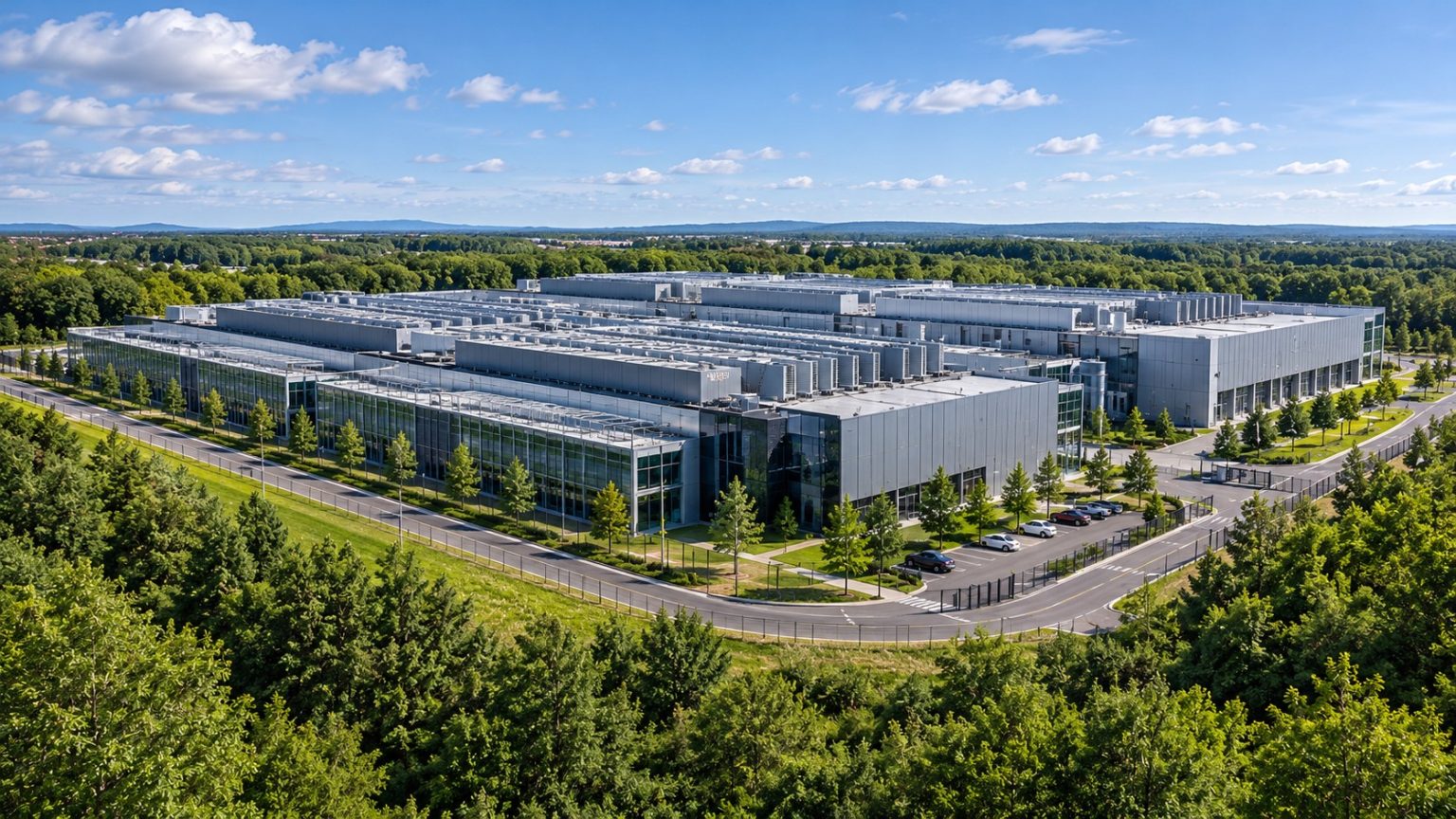

As demand for data centers grows, companies need a Chief Sustainability Officer who can guide site choices, cooling design, power contracts, and reporting to investors and regulators. Governments are also adding sustainability conditions to new capacity. Singapore assesses bids for new data center capacity partly on sustainability, including the use of green energy. The Malaysian state of Johor has said it will stop approving lower-tier data centers because of their water use. In Europe, the EU plans to issue A to G sustainability ratings for data centers from August 2027, although the scheme is still under review. Germany, an EU member state, also requires data centers that open from July 2026 to reach a Power Usage Effectiveness (PUE) of 1.2 or lower within two years, although a June 2026 cabinet draft would give operators four years. Christian Ehl, Global Functional Leader for Sustainability and ESG at Stanton Chase, explains what a data center Chief Sustainability Officer or Chief ESG Officer does and which skills boards should test when they hire one.
Data center companies need a Chief Sustainability Officer who can guide site and design decisions and explain them to regulators, investors, customers, and communities.
Every new data center raises questions about how it will be powered and cooled, and the people asking include grid operators, water authorities, investors, customers, and local residents. These questions are coming up more often because data center demand is growing worldwide. The International Energy Agency expects global data center electricity demand to roughly double by 2030, to around 945 TWh, which is more than Japan uses today. Some countries already feel the effect on their grids. In Ireland, for example, data centers used 23% of metered electricity in 2025, up from 5% in 2015.
Electricity demand
Data center power use is rising worldwide
945
TWh by 2030
Expected global data center electricity demand, more than Japan uses today, and roughly double today’s level
Data centers’ share of metered electricity in Ireland
23%
in 2025, up from 5% in 2015
Source: International Energy Agency; Central Statistics Office Ireland
In a data center company, the Chief Sustainability Officer (CSO) is often the executive who answers these questions. The CSO helps decide where the next campus goes and how it will be cooled. The role also has a say in which power contracts the company signs and what goes into the annual report. As a result, the CSO’s decisions affect the cost of each site as well as how the company explains its choices to people outside the business.
The data center sustainability brief
Four decisions where a data center CSO has a voice
Where the next campus goes
Chief Sustainability Officer
How it will be cooled
Which power contracts the company signs
What goes into the annual report
Why Do Data Center Companies Need a Chief Sustainability Officer?
Governments in Asia now attach sustainability conditions to new data center capacity. In August 2026, Singapore provisionally allocated 200 MW of new data center capacity to four operators, with 50 MW each. All four committed to powering more than half of their new capacity with green energy and to achieving Green Mark DC Platinum certification. Singapore’s Economic Development Board and Infocomm Media Development Authority selected the proposals partly on sustainability. In November 2025, Johor’s state government in neighboring Malaysia said it would stop approving so-called Tier 1 and Tier 2 data centers. These sites have more basic infrastructure, and a state official said they can use up to 200 times more water than higher-tier data centers. For a data center company with plans in Singapore, green energy now helps decide who wins new capacity, while in Johor the type of data center a company plans affects whether it can win approval at all.
Europe is also tying data center growth to sustainability through public ratings. On September 21, 2026, the European Commission adopted a rating scheme for EU data centers with at least 500 kW of installed IT power demand. The scheme is still under review, and the European Parliament and the Council can object to it until January 21, 2027. If neither objects, the first ratings are due on August 15, 2027. Each rating will grade Power Usage Effectiveness (PUE) and Water Usage Effectiveness (WUE) separately from A to G.
These two scores measure different things, but for both of them a lower number is better. PUE divides a site’s total energy use by the energy its IT equipment uses, so the best possible score is 1.0. WUE measures the water a site uses for each kilowatt-hour of IT energy. An A for PUE needs a score of 1.15 or below, and an A for WUE needs 0.1 or below, while a PUE above 1.9 or a WUE above 1.0 gets a G on that measure. According to Latham & Watkins, the label will also list the site’s energy sources and show whether it supports the grid or reuses waste heat.
Interactive
The EU data center rating
Work out how a data center would be graded
Enter a site’s yearly figures to see its score and EU grade, then switch to the water measure.
Power Usage Effectiveness (PUE)
1.33
Grade C
Above Germany’s 1.2 limit
PUE is the data center’s total energy use divided by the energy its IT equipment uses. A lower number is better, and 1.0 is the best possible score.
Water Usage Effectiveness (WUE)
0.33
Grade C
WUE is the freshwater a site takes in for each kWh its IT equipment uses. A lower number is better. Liquid cooling can cut or raise a site’s water use, depending on how the heat is rejected outdoors.
A note on units. The 2026 rating regulation divides freshwater input in cubic meters by IT energy in kWh, which, read literally, gives cubic meters per kWh. The 2024 reporting regulation it amends used IT energy in MWh, which gives liters per kWh. Law firm summaries and industry practice read the grade bands in liters per kWh, so this calculator uses liters.
Energy sources
The label also lists where the site’s electricity comes from
Grid and heat
It also shows whether the site supports the grid or reuses waste heat
Sources: European Commission; Latham & Watkins. Grade bands from the EU rating scheme, Delegated Regulation C(2026) 3472. The EU grades each measure separately from A to G.
Germany sets its own data center limits on top of the EU rating scheme. Under the German Energy Efficiency Act, new data centers that start operating from July 2026 must reach an annual average PUE of 1.2 or lower within two years of opening. A German cabinet draft adopted in June 2026 kept the 1.2 limit but gave operators four years to reach it. The same draft moved the deadline for covering all electricity use with renewable power from 2027 to 2030. A data center CSO in Europe will have to explain both the EU grades and any national limits to customers and investors.
Interactive
Sustainability rules
Governments are tying new data center capacity to sustainability
Choose a place on the timeline to see what it asks of data center companies.
Johor, Malaysia
In November 2025, the state government said it would stop approving so-called Tier 1 and Tier 2 data centers. These sites have more basic infrastructure, and a state official said they can use up to 200 times more water than higher-tier data centers.
Germany
New data centers that start operating from July 2026 must reach an annual average PUE of 1.2 or lower within two years of opening. A June 2026 cabinet draft kept the 1.2 limit but gave operators four years to reach it.
Singapore
In August 2026, 200 MW of new capacity was provisionally allocated to four operators, 50 MW each. All four committed to powering more than half of their new capacity with green energy and to Green Mark DC Platinum certification.
European Union
The first A to G ratings are due on August 15, 2027, for data centers with at least 500 kW of installed IT power demand, if neither the European Parliament nor the Council objects by January 21, 2027.
Sources: Singapore Economic Development Board; The Star; German Energy Efficiency Act; European Commission
Local communities ask data center companies about power and water as well, often with more urgency than regulators. At least 25 data center projects in the United States were canceled after local opposition in 2025, compared with six in 2024. Water was the top concern, raised in more than 40% of contested projects, ahead of energy use and electricity prices. In Mexico, residents and officials in Querétaro disagree in public about whether data centers are making the state’s water shortages worse. Querétaro’s Secretary of Sustainable Development has said the state’s water problems began before the data centers arrived. Even where the facts are disputed, a data center company needs a sustainability leader who can explain clearly to residents how much water it uses and work to keep that use from harming the local population.
Local acceptance
Data center projects canceled after local opposition in the United States
6
in 202425+
in 2025Each icon represents one canceled project
40%+
of contested projects raised water use, the top concern, ahead of energy use and electricity prices
Source: Heatmap News
To make its case to regulators and communities, a data center company needs reliable sustainability data. Uptime Institute’s 2025 global survey found that the share of data center operators collecting energy consumption data for sustainability purposes fell from 89% to 84% in a year. Over the same period, the share tracking PUE fell from 76% to 74%. Uptime links part of the drop to large expansion projects, including AI data centers. Public ratings and capacity tenders will make these figures far more visible, so a CSO who can improve how the company collects and reports energy and water data protects the company’s case for new sites.
Sustainability data
Fewer data center operators are collecting key sustainability data
Operators collecting energy consumption data
84%
Operators tracking Power Usage Effectiveness
74%
Source: Uptime Institute Global Data Center Survey 2025
What Does a Data Center Chief Sustainability Officer Do?
A data center Chief Sustainability Officer spends much of their time with engineers and the finance team, because site data and capital plans drive the job. The role usually covers four areas:
- Power: working with the energy team on renewable power purchase agreements, grid connections, and energy production projects, then explaining the emissions effect of each choice to the board.
- Water: guiding cooling design so that water use stays within what local authorities and residents will accept.
- Embodied carbon: reducing the Scope 3 emissions embodied in the concrete, steel, servers, and chips the company buys.
- Community and disclosure: preparing the evidence that local communities and permitting bodies ask for, along with the figures investors and regulators require.
The data center CSO role
Four areas a data center Chief Sustainability Officer usually covers
Power
Renewable power purchase agreements, grid connections, and energy production projects, plus the emissions effect of each choice
Water
Cooling design that keeps water use within what local authorities and residents will accept
Embodied carbon
Scope 3 emissions in the concrete, steel, servers, and chips the company buys
Community and disclosure
The evidence communities and permitting bodies ask for, and the figures investors and regulators require
Two of these areas, power and embodied carbon, can push emissions up quickly when a company is building many new sites at once. Microsoft reported that its total emissions rose 25% in 2025, from about 16 million metric tons in 2024 to about 20 million. The company linked the rise to new data center construction and to a previously announced pause in buying some renewable energy credits. Construction adds embodied carbon to Scope 3 emissions, while the pause in credits raised market-based Scope 2 emissions from electricity. In the same report, Microsoft’s President and its Chief Sustainability Officer wrote that sustainability solutions are not scaling fast enough to meet demand. Boards planning new data center capacity should expect their own CSO to face the same tension between adding capacity and meeting emissions targets.
Should a Data Center Company Hire a Chief ESG Officer or a Chief Sustainability Officer?
The choice between a Chief Sustainability Officer and a Chief ESG Officer depends on what the data center company needs its leader to do. A Chief Sustainability Officer fits best when the main task is improving how the sites themselves use power and water. A Chief ESG Officer often suits data center platforms owned by infrastructure funds or private equity, where investor reporting and governance carry as much weight as site performance.
Interactive
Choosing the title
Chief Sustainability Officer or Chief ESG Officer?
Choose what the role needs to focus on to see which title usually fits.
Usually the better fit
Chief Sustainability Officer
Fits best when the main task is improving how the sites themselves use power and water
Usually the better fit
Chief ESG Officer
Often suits platforms owned by infrastructure funds or private equity, where investor reporting and governance carry as much weight as site performance
Which Skills Should Boards Test When Hiring a Data Center Sustainability Leader?
When boards hire a data center Chief Sustainability Officer (CSO) or Chief ESG Officer, the first skill to test is technical knowledge. A credible candidate can explain Power Usage Effectiveness (PUE) and Water Usage Effectiveness (WUE) without notes and knows how a power purchase agreement lowers market-based Scope 2 emissions, while location-based figures stay tied to the local grid. Good candidates also understand that liquid cooling can cut or raise a site’s water use, depending on how the heat is rejected outdoors. Boards can test this knowledge with questions such as these:
- How would you lower our PUE at an existing site without raising water use?
- How do our power purchase agreements change the emissions we report?
- Which of our planned sites would face the hardest questions about water, and why?
- How would you explain a poor EU rating to an investor?
Boards should also test how well candidates understand AI. In Deloitte’s 2026 Chief Sustainability Officer Survey, 73.6% of CSOs named AI applications to sustainability as an area they should learn more about. For a data center CSO, that knowledge has a practical use, since AI tools can help a company track and manage the energy and water data that ratings and tenders now ask for.
Skills for sustainability leaders
Many CSOs say they should learn more about AI
73.6%
of CSOs named AI applications to sustainability as an area they should learn more about
For a data center CSO, AI tools can help track and manage the data that ratings and tenders now ask for
Source: Deloitte 2026 Chief Sustainability Officer Survey
The last skill to test is influence outside the company, which is harder to judge from a résumé than technical knowledge. In a single month, a data center CSO might meet grid operators in Dublin, water officials in Johor, government agencies in Singapore, and investors in New York. To judge that influence, we look for candidates who have persuaded regulators or communities and have changed a capital decision, such as a site choice or a cooling design.
How Does Stanton Chase Run Data Center Executive Search?
For data center executive search, we at Stanton Chase bring our Sustainability and ESG practice together with consultants from our Technology practice. Each search is led by consultants who understand both sustainability and the data center industry.
We run each data center search through Search+™, our partner-led retained search process. Executive assessment is part of every search and shows the client how a candidate weighs growth against power and water limits. Once the new CSO starts, our onboarding support, which comes with every placement, helps them build working relationships with operations and finance in the first months.
Beyond the sustainability role, we lead searches for the data center CEOs, CFOs, COOs, and Chief Technology Officers who work alongside the CSO. We also recruit board directors who can oversee energy and climate risk. Because the CSO’s decisions affect the cost of each site, and a data center company’s growth depends on winning approval for new sites, we advise having the CSO report directly to the CEO.
About the Author
Christian Ehl is a Partner at Stanton Chase Düsseldorf and the firm’s Global Functional Leader for Sustainability and ESG. He has more than twenty years of experience in executive search and leadership advisory. Christian began working on sustainability in 2004, when he wrote his thesis on corporate social responsibility, and he has since built a network of candidates across the field. He is the author of several sustainability white papers and articles, and he supports clients moving to more sustainable business models with the right people in place. He completed a coaching certification in systemic and change coaching in 2008. Christian holds a degree in international business administration from Accadis Business School and a further degree from the University of Newcastle.
How Can We Help?
At Stanton Chase, we're more than just an executive search and leadership consulting firm. We're your partner in leadership.
Our approach is different. We believe in customized and personal executive search, executive assessment, board services, succession planning, and leadership onboarding support.
We believe in your potential to achieve greatness and we'll do everything we can to help you get there.
View All Services