


In the third of four interviews, Dietrich Hauffe, Global Sector Leader for Life Sciences and Healthcare at Stanton Chase, talks to Sebastian Kracht, who most recently served as Senior Director Global Customer Experience at Abbott Diabetes Care, about the leaders the life sciences industry will need next. Sebastian sets out the areas a senior marketing leader should have worked in, including consumer and HCP marketing, sales training, medical, and customer service. He explains why good leaders surround themselves with specialists and gives younger marketers practical advice on building breadth. He expects versatility to be the quality healthcare companies need over the next five years.
Sebastian Kracht believes future life sciences marketing leaders will need experience across the whole business and the versatility to lead very different teams.
About this interview
Part three of this interview series looks at the marketing leaders life sciences companies will need next. Dietrich Hauffe, Stanton Chase’s Global Sector Leader for Life Sciences and Healthcare, puts the questions to healthcare marketing executive Sebastian Kracht.
Biopharma commercial teams expect substantial change. In a Deloitte survey of commercial leaders, 56% said the entire commercial function needs to change significantly or transform fully, and only 30% felt their organization is well prepared to respond to market trends.
Biopharma commercial
Commercial leaders expect big change
56%
said the entire commercial function needs to change significantly or transform fully
30%
felt their commercial organization is well prepared to respond to market trends
76%
are still hindered by siloed and outdated data infrastructures
Source: Deloitte Center for Health Solutions, survey of 100 US biopharma commercial leaders, June 2025
The people who lead those teams will have to carry much of that change. In the third conversation of this series, I asked Sebastian, who most recently served as Senior Director Global Customer Experience at Abbott Diabetes Care, what senior marketing leaders in life sciences now need. We also discussed how younger marketers can prepare.
What Experience Does a Senior Life Sciences Marketing Leader Need?
Sebastian’s answer is breadth. “A senior marketing leader has to have had experience across a variety of areas,” he says, starting with the basics of working with both consumers and healthcare professionals (HCPs). HCPs are far from uniform in how they want to hear from companies. IQVIA’s channel data puts face-to-face visits at 24% of UK HCPs’ preferred channel mix, compared with 45% in Italy.
Interactive
HCP channel preferences
How much HCPs want to meet face to face depends on the market
Choose a country to compare.
of HCPs’ preferred channel mix is face-to-face visits
Source: IQVIA ChannelDynamics Channel Preference Survey 2025, more than 33,000 HCPs in 38 countries, November 2025
Sales training comes next on his list. “How can I expect my sales force to do their job compellingly if I haven’t figured out a way to help them deliver key messages in their language?” he asks. He also wants marketers to work closely with medical colleagues and to understand how the health system interacts with their products.
Commercial experience completes the foundation. “Part of being customer-centric is the ability to walk in the shoes of our own colleagues, no matter where they work, especially sales,” Sebastian says. “If you don’t have direct P&L responsibility, find a way to own and manage your budget like a general manager.”
He saves his firmest words for customer service, which he believes companies still undervalue. “It continues to be considered, incorrectly, the place people call once there is a problem,” he says. “It is so much more than that. Get this right and you will have solved the problem before it occurs.” All of this experience, in his view, builds the same quality. “It’s time for the refrain of our song,” he says. “Empathy.”
Interactive
The senior marketing leader
Depth first, then breadth
Build the profile one step at a time.
“Depth is very important. But once you have achieved depth in one specific area, see where else you can go to gain breadth.”
“A senior marketing leader has to have had experience across a variety of areas.”
“How can I expect my sales force to do their job compellingly if I haven’t figured out a way to help them deliver key messages in their language?”
Work closely with medical colleagues, and understand how the health system interacts with your products.
“If you don’t have direct P&L responsibility, find a way to own and manage your budget like a general manager.”
“Get this right and you will have solved the problem before it occurs.”
“It’s time for the refrain of our song. Empathy.”
Can One Leader Cover Every Part of the Business?
No single leader can master every channel, and Sebastian sees breadth as a foundation that still needs the right team around it. “A good leader is comfortable surrounding themselves with incredibly talented people in a specific area,” he says. “That’s where the magic happens.” The leader’s job, as he puts it, is “bringing the right people into the team and making sure they work in unison with one another and feel equally valued.” Through that process, the leader can also identify who the next cross-functional leader will be.
“A good leader is comfortable surrounding themselves with incredibly talented people in a specific area. That’s where the magic happens.”
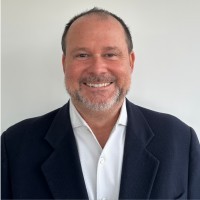
Sebastian Kracht
Employers rank these leadership skills highly as well. The WEF’s Future of Jobs Report 2025 places leadership and social influence among employers’ top core skills for 2025, after analytical thinking and “resilience, flexibility and agility.”
How Can Younger Marketers in Life Sciences Build Toward Leadership?
Sebastian’s advice to younger marketers follows the same thinking about breadth. “The answer is simple when spoken,” he says. “It is a little bit more complicated when it comes to execution. Depth is very important. But once you have achieved depth in one specific area, see where else you can go to gain breadth. Many times, that means a horizontal move. Moves across an organization are just as important as moves up it, and sometimes they teach you the most.” In his experience, breadth rarely comes from a straight climb. “You can’t move from being a great marketer to being a sales director if you have never done sales,” he says. “You have to move sideways, do some sales, and if you like it, then go up.”
Gaining that breadth depends on support from above. “One needs a manager who is bold and supportive of your growth, and does not box you in,” he says. He had that support early in his own career. “Johnson & Johnson’s MBA recruitment program was very thorough and did a great job in supporting my desire to be more than just a marketer.”
Younger workers seem open to a slower, broader route as well. Deloitte’s 2026 Gen Z and Millennial Survey found that only 25% of Gen Zs prefer fast-paced career progression marked by rapid promotions, while 44% favor steady progress and 21% are willing to move laterally or take a step back to find the right role.
The incoming workforce
Few Gen Zs want a fast track to the top
25%
of Gen Zs prefer fast-paced career progression marked by rapid promotions
44%
of Gen Zs favor steady progress
Source: Deloitte 2026 Gen Z and Millennial Survey, more than 22,500 respondents in 44 countries, May 2026
Sebastian also recommends outside guidance. “Find yourself a good mentor, ideally from another department or division,” he says. “And if you can get sponsored to do so, get yourself a coach. Some mistakenly label that as a sign of weakness. On the contrary, it makes you better.” Employees who have mentors report similar benefits. In a Future Skills Centre study of Canadian workers, 83% of employees with a mentor said the relationship helped them advance their careers.
Mentoring at work
Employees with a mentor say it helps
83%
found it helpful in advancing their careers
89%
found it helpful in learning new skills
90%
found it helpful in improving their job satisfaction
Source: Future Skills Centre, Mentorship in the Workplace, Canadian employees with a mentor, March 2025
What Will Count in Healthcare Leadership Over the Next Five Years?
When I asked which kind of leader healthcare companies will need over the next five years, Sebastian named versatility. “Versatility will become a greater need,” he says. He points to the pandemic, which changed many old office habits, and to new generations entering the job market as AI becomes part of everyday operations. Those new generations already use the technology, and the same Deloitte survey found that 74% of Gen Zs use AI to some extent in their day-to-day work.
He expects these changes to test some leaders hard. “This is going to test those who are more averse to change or fixed into one specific way of working,” Sebastian says. “Acknowledging the differences and different angles everyone comes from will be key to leading a successful team.”
The next five years
Why versatility will count
The skills those teams rely on are changing quickly as well. The WEF expects 39% of workers’ existing skill sets to be transformed or become outdated between 2025 and 2030.
Interactive
Future of Jobs Report 2025
Skills are changing fast
Switch between 2025 and 2030.
100%
of a worker’s existing skill set today
39%
of workers’ existing skill sets are expected to be transformed or become outdated between 2025 and 2030
companies consider analytical thinking essential in 2025
Source: World Economic Forum, Future of Jobs Report 2025, over 1,000 employers in 55 economies, January 2025
What Does This Mean for Succession in Life Sciences?
The breadth Sebastian describes is harder to read from a CV, particularly when lateral moves sit beside promotions and job titles do not explain what a person learned in each role. Reading those careers well is central to how our Life Sciences and Healthcare practice approaches executive search and assessment. The final article in this series looks at Sebastian’s own career and what it taught him about reinvention.
About the Author
Dietrich Hauffe, Ph.D., is a Partner in Stanton Chase’s Düsseldorf office. He is the firm’s Global Sector Leader for Life Sciences and Healthcare and Global Subsector Leader for Biotechnology, and he also specializes in marketing and sales, R&D, operations, and other appointments. His expertise covers analytical technology, biotechnology, biopharmaceuticals, diagnostics, medical devices, and bioinformatics, and he worked in North America for more than a decade.
How Can We Help?
At Stanton Chase, we're more than just an executive search and leadership consulting firm. We're your partner in leadership.
Our approach is different. We believe in customized and personal executive search, executive assessment, board services, succession planning, and leadership onboarding support.
We believe in your potential to achieve greatness and we'll do everything we can to help you get there.
View All Services