


In the second of four interviews, Dietrich Hauffe, Global Sector Leader for Life Sciences and Healthcare at Stanton Chase, talks to Sebastian Kracht, who most recently served as Senior Director Global Customer Experience at Abbott Diabetes Care, about personalized, data-driven care. Sebastian argues that people and mindset have to change before technology can make a difference, and that digital and data capability now belong together. Drawing on a direct-to-consumer launch in Europe at Abbott Diabetes Care, he describes how firm leadership commitment moved an organization quickly and what profile a company should seek when it appoints its first leader for personalized care.
Sebastian Kracht believes data-driven healthcare depends first on people, and on leaders who bring as much empathy as expertise.
About this interview
Part two of this interview series is about digital and data transformation. Healthcare marketing executive Sebastian Kracht shares his views with Dietrich Hauffe, Stanton Chase’s Global Sector Leader for Life Sciences and Healthcare.
Healthcare companies have more usable data than ever before, but getting people to act on it remains the harder task. BCG estimates that about 10% of AI’s value comes from algorithms and 20% from the technology to implement them, while rethinking the people component accounts for 70%. Life sciences companies are seeing the same thing. In Deloitte’s 2026 life sciences outlook, only 22% of leaders said they have successfully scaled AI, and just 9% reported significant returns.
Interactive
AI in life sciences
Most of AI’s value sits with people, and few companies have scaled it
Click the buttons to switch views.
Source: BCG, AI Transformation Is a Workforce Transformation, February 2026
expect AI to play a central role in driving major change
have successfully scaled AI
report significant returns from AI
Each square is one in every 100 life sciences C-suite executives. Source: Deloitte, 2026 life sciences executive outlook, 280 biopharma and medtech C-suite executives, December 2025
Sebastian, who most recently served as Senior Director Global Customer Experience at Abbott Diabetes Care, has led teams through the people side of this kind of change. In the second conversation of this series, I asked him what it takes to move an organization toward personalized, data-driven care.
Why Does Healthcare Data Transformation Start with People?
When I asked whether technology or mindset has to change first, Sebastian did not hesitate. “The million-dollar question,” he says. “My experience has taught me that there is one answer, and one answer only. People.” He has seen what happens when that part is missing. “I have been in situations where the technology was there, right in front of our faces, but the willingness to change wasn’t. And sadly, there was no change.”
“I have been in situations where the technology was there, right in front of our faces, but the willingness to change wasn’t. And sadly, there was no change.”
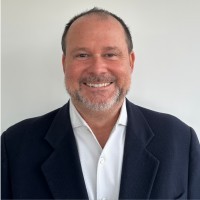
Sebastian Kracht
In his view, leaders decide what technology achieves through the way they empower their teams. That means starting at the top and cascading the change carefully, with support at every level. “Everyone in an organization should feel empowered and supported to embrace new technology, as long as this is done ethically and with clear guardrails in place,” he says. Leaders also have to defend that internal change as an investment, because it competes for budget in a business that has always put products first.
Sebastian believes many healthcare companies still underestimate what their own products have become. “Many companies still think they are selling a product. Some say they are selling a service, but they are still selling a product,” he says. “They don’t realize that the minute a product comes with an app, it becomes a service. Even your washing machine now tells you on your phone when it has switched on or off.”
What a company does with those app updates decides whether people engage or switch the notifications off. “If you have just run a glucose test, being told that you took it at 10 p.m. adds nothing, because you already know that,” he says. “Being told that you should have tested before eating rather than after is a useful insight.” Relevant prompts invite people to respond, and every response teaches the company something. “The more people interact with us, the more we can learn from them, and the more we learn, the better the service we can provide.”
Why Do Digital and Data Capability Belong Together?
Many healthcare companies still treat digital and data as separate domains, but Sebastian thinks the line between them is disappearing. “As technology rapidly progresses, any separation between what many call digital marketing and data fluency disappears,” he says. Nearly every product and service will soon run through an app, and the moment it does, a company captures usage data it never had, or never had at that volume and speed.
That usage data changes how a company talks to the people who use its products. “We can start changing the game and move away from one-way message ‘bombardment,’ telling the user what we expect them to do, towards learning what works and doesn’t work in our current offering,” he says. Teams can also see which outcomes a call to action produced, whether the company designed and intended them or not.
Interactive
Digital and data together
From telling users to learning from them
Switch from one-way messaging to two-way dialogue.
Messages go out, telling users what the company expects them to do. The company learns little about what happened next.
through an app
“We can start changing the game and move away from one-way message ‘bombardment’ … towards learning what works and doesn’t work in our current offering.”
Sebastian Kracht
Few companies are set up to work this way. In BCG’s research on omnichannel engagement, only 10% of biopharma and medtech companies had fully integrated data platforms, and 90% said siloed systems are a top barrier to omnichannel success.
Data integration
Siloed systems hold back omnichannel engagement
10%
of biopharma and medtech companies have fully integrated data platforms
90%
say siloed systems are a top barrier to omnichannel success
Source: BCG, How Biopharma and Medtech Leaders Can Get Omnichannel Right, more than 100 senior omnichannel leaders, June 2025
What Does a Direct-to-Consumer Launch Ask of Leadership?
Big pharma and medtech companies already know they must innovate. Sebastian sees the harder question as how far to go, at a time when the market is more crowded and health systems face pressures they have never faced before. His last major launch at Abbott Diabetes Care settled that question early. “Leadership was clear on one thing,” he says. “This would be a different kind of launch.” The launch in Europe would be direct-to-consumer, and leadership treated that choice as fixed. “Everything else moved around it.” The direct-to-consumer go-to-market was mainly driven from Europe, the Middle East, and Africa, as well as Asia-Pacific outside Japan. Europe went furthest with it, including online sales through webshops, while across every market the aim was for end users to love the product enough to ask for it.
Committing to that model changed how the company hired. Key roles, marketing among them, had to be redefined, and “search for these roles took a level of scrutiny and attention like never before,” Sebastian says. When the team hit a hurdle, leaders worked to solve it instead of reopening the question of whether or how to launch. They also welcomed the new people and ways of working that the launch brought in. “The attitude was, ‘We don’t know what we don’t know,’ so let’s do as much work as possible to avoid any surprises.”
Inside a direct-to-consumer launch
What leadership did differently
The launch team also defined the customer broadly, taking in patients and their loved ones, the healthcare professionals involved, key opinion leaders, advisory boards, patient associations, and the governments and advocacy groups working on diabetes care. Sebastian refers to everyone involved in a patient’s care as the community, and the person using a device is not always the patient. A grandchild may set it up, or a care worker in a nursing home may handle it most of the time. Looking back, Sebastian is still struck by the pace. “You cannot imagine how much change needed to take place in a relatively short period of time. We were reinventing the existing standard of care for glucose monitoring!”
Interactive
A broad definition of the customer
Who the launch team listened to
Widen the circle.
Pharma companies are moving toward direct-to-consumer models as well. IQVIA notes that pharma companies are going direct to consumers through platforms of their own, and providers appear open to them. In a DHC Group survey reported by EMARKETER, 77% of healthcare providers said they would recommend direct-to-patient portals to consumers seeking medication information. Only 16% of respondents viewed the pharma industry as patient-centric.
Direct-to-patient
Patients and providers want more from pharma
16%
of respondents view the pharma industry as patient-centric
77%
of healthcare providers would recommend direct-to-patient portals to consumers seeking medication information
81%
think pharma companies should provide resources to help patients manage their care
Source: DHC Group survey of consumers and physicians, as reported by EMARKETER, May 2025
Who Should Lead Personalized, Data-Driven Care?
A company appointing its first leader for personalized, data-driven care is often creating a role it has never had before. Sebastian would start with evidence of customer centricity. “First, someone who you have proof is customer-centric, who can walk in a patient’s shoes,” he says. He would then look for humility. “Their job is to coach the organization across an almighty barrier, change, and that makes it important for this leader to make it about others.”
He would also consider candidates from outside the category. “Sometimes the transformation is so big, you might want someone who comes with fresh eyes,” he says. “A quick learner can learn almost any new category.” Knowledge of the field still counts in his view, as long as it comes with empathy. “Subject matter expertise is important, but just as important is empathy.”
The first personalized care leader
What the right profile looks like
01
Proven customer centricitySomeone who can walk in a patient’s shoes.02
Ego set asideThe job is to coach the organization through change.03
Fresh eyesConsider a quick learner from outside the category.“Subject matter expertise is important, but just as important is empathy.”
Sebastian Kracht
What Does This Mean for Healthcare Companies Hiring Data Leaders?
Sebastian’s profile asks hiring committees to look past category experience and to test for humility and customer centricity as well. Defining that profile before the search starts, and then assessing candidates against it, is the kind of brief our Life Sciences and Healthcare practice takes on. The third article turns to the leaders life sciences will need next.
About the Author
Dietrich Hauffe, Ph.D., is a Partner in Stanton Chase’s Düsseldorf office. He is the firm’s Global Sector Leader for Life Sciences and Healthcare and Global Subsector Leader for Biotechnology, and he also specializes in marketing and sales, R&D, operations, and other appointments. His expertise covers analytical technology, biotechnology, biopharmaceuticals, diagnostics, medical devices, and bioinformatics, and he worked in North America for more than a decade.
How Can We Help?
At Stanton Chase, we're more than just an executive search and leadership consulting firm. We're your partner in leadership.
Our approach is different. We believe in customized and personal executive search, executive assessment, board services, succession planning, and leadership onboarding support.
We believe in your potential to achieve greatness and we'll do everything we can to help you get there.
View All Services